Skip to content

TECHNOLOGY × CREATIVITY × NATURE × IMPACT

TECH VISIONARY.

Building at the intersection of technology, AI, systems, creative vision, and what comes next.

BUILD WHAT MATTERS.
KEEP THE REST PRIVATE.

TECHNOLOGY + AI

Intelligence. Systems. Emerging technology.

SYSTEMS + INFRASTRUCTURE

Building the architecture behind serious ideas.

BRAND + CREATIVE VISION

Positioning. Perception. Story. Execution.

NATURE + EXPLORATION

Mountains. Solitude. Perspective. Purpose.

EXPLORE
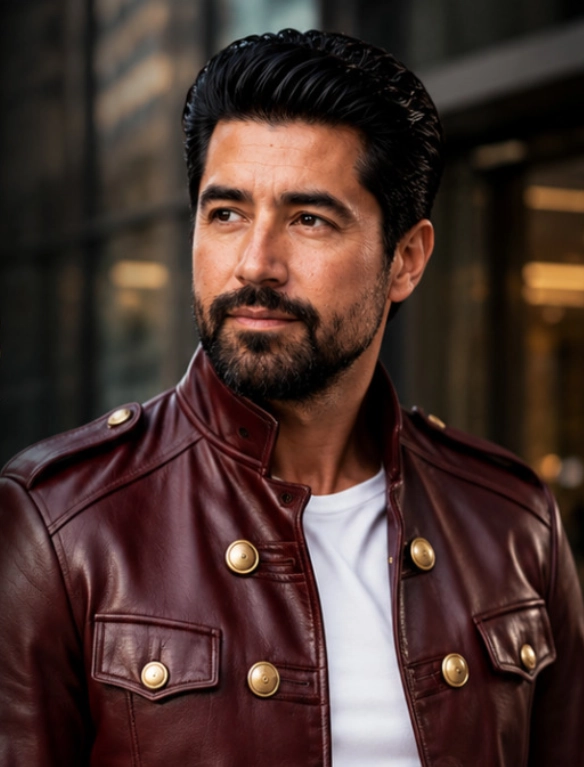
Portrait of Cazonci Yacata in a dark leather jacket with brass-gold buttons.
A HIGHER STANDARD
FOR WHAT’S NEXT.
QUIET MINDS
BUILD
EXTRAORDINARY
THINGS.
CAZONCI.COM SIMPLE IDEAS. BIGGER IMPACT.
VISION

BUILD WHAT
COMES NEXT.

I believe technology should expand human capability—not diminish human purpose.

Artificial intelligence is changing how we build, work, create, communicate, and make decisions. The opportunity is not to chase technology for the sake of technology. It is to apply intelligence with judgment, imagination, discipline, and purpose.

The strongest ideas rarely belong to one discipline.

Technology. Systems. Brand. Creativity. Human behavior. Execution.

The advantage comes from seeing how they connect.

My focus is simple: turn difficult ideas into useful systems, durable companies, meaningful experiences, and real-world progress.

LESS NOISE. LESS THEATER.
MORE CLARITY. MORE EXECUTION.

But progress without stewardship is incomplete.

The mountains, wilderness, and natural world are not the opposite of technology. They are part of what technology should help us preserve.

I believe the strongest future is one where human intelligence and artificial intelligence work together—where innovation serves people, ideas become reality, and progress leaves something better behind.

VISION × COURAGE × EXECUTION × REPEAT.
Think farther. Build deliberately. Leave something better.

A HIGHER STANDARD
FOR WHAT’S NEXT.

ORIGIN

THE STUDIO WAS
THE FIRST SYSTEM.

After graduating high school in 1994, I entered recording engineering and music production. The studio became my first serious laboratory—part creative workshop, part technical system, part training ground.

When class ended, I stayed—often until the building closed. While professors finished grading, I kept working: signal flow, mixer consoles, microphones, mic placement, recording, editing, beat-making, Pro Tools, Cubase, and the craft behind producing rap, house, and deep house music.

I also learned the architecture behind the music itself: songwriting and lyric craft in both English and Spanish, along with composition, scoring, arranging, recording, and production. Keyboard was my primary instrument; drum machines and sequencers became extensions of the way I wrote, arranged, and built tracks.

Over time, I wrote and arranged well over 150 original songs in English and Spanish. I intend to release selected work over the next five years under my own label, Cazonci Music.

Those extra hours changed everything. Every session depended on an invisible architecture—inputs, routing, timing, hardware, software, troubleshooting, judgment, and preparation. Long before enterprise networks, I was already learning how complex systems behave under pressure.

1994 RECORDING ENGINEERING

Production, consoles, microphones, software, recording, and signal flow.

WRITING ENGLISH + SPANISH

Songwriting and lyrics in English and Spanish, supported by composition, scoring, arranging, and production.

INSTRUMENTS KEYS + MACHINES

Keyboard, drum machines, sequencers, beat-making, and electronic production.

AFTER HOURS STAYED TO LEARN

The room emptied. I stayed. The studio became the laboratory.

That intensity was noticed by twin music educators David W. Megill, Ph.D. and Donald D. Megill, M.A. They trusted me with extensive studio access and brought me into the operation as an assistant—helping oversee the recording studio and computer lab, supporting student sessions, setting up microphones and software, troubleshooting hardware, and keeping the environment ready to work.

MUSIC TAUGHT ME TO LISTEN.
THE STUDIO TAUGHT ME SYSTEMS.

THEN ONE CONVERSATION CHANGED THE DIRECTION. THE PIVOT →
PIVOT

ONE CONVERSATION
CHANGED THE TRAJECTORY.

David W. Megill, Ph.D. recognized that my aptitude extended beyond music. He saw how naturally I understood computers, software, and technical systems, and urged me to spend the next year or two studying computer networking and computer science.

I listened.

At Coleman College, I graduated after studying computer networking and computer science. I built formal depth across network architecture, security, Active Directory, Novell, Cisco systems, firewalls, systems administration, troubleshooting, and the logic behind connected systems.

01 RECOGNITION

A professor recognized the technical aptitude before I understood where it could lead.

02 COLEMAN COLLEGE

Computer networking, reinforced by computer science. Formal study turned instinct into discipline.

03 SYSTEMS THINKING

Networks, security, directory services, Cisco, Novell, firewalls, administration, and troubleshooting.

04 NAMM

The technical foundation became a bridge from the studio to technology at industry scale.

It was not a departure from music. It was a translation. The studio taught me signal flow; networking taught me data flow. The studio taught me routing; networking taught me architecture. Computer science sharpened the logic underneath both.

David and Don Megill had already trusted me with responsibility in the studio and computer lab. Their recommendation, combined with the technical foundation I built afterward, helped open the door to the National Association of Music Merchants (NAMM)—the global nonprofit trade association behind The NAMM Show, the world’s largest music products trade show. That was where music, technology, business, brand, and major-event production converged at scale.

LEARNING AT SCALE

NAMM BECAME AN EDUCATION IN HOW WORLD-CLASS ORGANIZATIONS OPERATE.

NAMM brought global brands, artists, manufacturers, retailers, technologists, executives, media, and production teams into the same ecosystem. Working close to core technology operations and major-event infrastructure gave me a rare vantage point: I could see how technology, brand, marketing, software, engineering, production, operations, and audience experience moved together.

I paid attention. I asked questions relentlessly. I learned from experienced executives, marketers, brand leaders, computer engineers, software developers, and production professionals—not only what they did, but why they did it.

Being inside that level of execution taught me how major events are produced from the core: thousands of moving parts, one standard, one experience.

ADVANCED TRAINING

NAMM INVESTED IN MY TECHNICAL DEVELOPMENT.

Throughout my years there, NAMM invested directly in my technical development, sending me through advanced professional IT training across enterprise networking, infrastructure, systems, security, and related technologies.

The training was specialized, intensive, expensive, and directly relevant to the environments I was responsible for supporting. NAMM covered it. I remain deeply grateful for that investment and for the people who shared their knowledge with me.

Formal study built the foundation. Professional training deepened it. Real-world responsibility put it under pressure.

I listened to people who saw something in me before I fully understood where it could lead. I owe a meaningful part of that trajectory to David and Don Megill—and I remain grateful for the people and opportunities at NAMM that helped me keep growing.
MUSIC TAUGHT ME TO LISTEN.
NETWORKING TAUGHT ME TO CONNECT.
COMPUTER SCIENCE TAUGHT ME TO THINK IN SYSTEMS.
NAMM TAUGHT ME SCALE, BRAND, BUSINESS, TECHNOLOGY, AND EXECUTION.

THE REST HAPPENED AFTER HOURS. MASTERY →

MASTERY

THE MAJORITY OF MY EDUCATION
HAPPENED AFTER HOURS.

School gave me a foundation. Work gave me responsibility. Professional training accelerated both. But most of the learning that shaped me happened somewhere quieter—after hours, at home, in private labs, at hackathons, at technical events, and around other builders who wanted to understand how things worked.

When most people were sleeping, I was still learning: programming, configuring networks, building software, connecting systems, reading documentation, testing ideas, breaking environments, fixing them, and starting again.

THE PRIVATE LAB

I BUILT REAL SYSTEMS SO I COULD BREAK THEM, FIX THEM, AND UNDERSTAND THEM.

For years, my garage and home office housed a serious technical lab—servers, network equipment, firewalls, workstations, databases, development environments, and the hardware and software needed to reproduce real-world business networks and systems.

I built networks. Wrote software. Connected servers, applications, data, security, and wireless systems. Then I broke things on purpose, diagnosed the failure, rebuilt the environment, and pushed it further.

I was not always on a payroll. I never stopped doing the work. Most of those hours were unseen, and that was fine. The point was understanding.

BUILDING WITH OTHERS

SOME OF THE BEST CLASSROOMS HAD NO CLASSROOM.

Hackathons, technical events, and late-night sessions with friends became another kind of laboratory. We built software together, connected networks, compared approaches, challenged assumptions, and learned by making things work.

I asked questions everywhere I went. The goal was never to look knowledgeable. The goal was to leave knowing more than I knew when I arrived.

FAILURE AS DATA

NOT EVERYTHING I BUILT WORKED. THE LESSONS STILL DID.

I launched a software-development startup in Los Angeles. It failed.

That experience taught me something technical training cannot: a product can be possible and still fail because timing, positioning, market fit, distribution, capital, or execution are wrong.

I learned to study failure the same way I studied systems—without romance, without excuses, and without wasting the lesson.

THE MOUNTAINS

I STEPPED AWAY FROM CONVENTIONAL EMPLOYMENT. I DID NOT STEP AWAY FROM GROWTH.

For a period, I went deep into hiking, climbing, rock climbing, camping, and exploration while training for years toward a Mount Everest attempt. The mountains became another place to practice preparation, judgment, endurance, and humility.

Then a serious fall changed the plan and led to years of rehabilitation. The objective changed. The discipline did not.

Technology never disappeared. I kept studying for hours at a time—programming, networking, systems, emerging technology, and artificial intelligence—using the same private lab and self-directed discipline that had shaped me from the beginning.

THE JOBS CHANGED. THE LEARNING NEVER STOPPED.
BUILD. BREAK. UNDERSTAND. REBUILD.

MOST OF MY EDUCATION HAPPENED WHEN NOBODY WAS WATCHING.
THAT IS STILL HOW I LEARN TODAY.

FOCUS

I DON’T CHASE CATEGORIES.
I BUILD ACROSS THEM.

I’ve never fit neatly into one box.

Technology. Artificial intelligence. Infrastructure. Brand. Music. Creativity. Nature.

Different disciplines on the surface. To me, they are connected systems.

I look for the pattern, the leverage point, the thing others miss—and the execution that turns an idea into something real.

I DON’T COLLECT TITLES. I BUILD.

TECHNOLOGY + AI

Technology has been part of my life for decades. I care less about novelty than consequence—what expands capability, changes behavior, or makes a difficult problem solvable.

Artificial intelligence is powerful, but intelligence without judgment is simply acceleration. The advantage comes from pairing machine capability with human context, imagination, discipline, and execution.

Technology should create leverage, solve meaningful problems, and expand what people are capable of building.

I DON’T CHASE TRENDS.
I STUDY WHAT CHANGES THE GAME.

SYSTEMS + INFRASTRUCTURE

Most people notice the interface. I notice the architecture underneath it.

At the National Association of Music Merchants (NAMM), I worked at the core of technology operations supporting the systems behind the organization and its major events. I traveled across the country deploying and supporting infrastructure inside major convention centers, where networks, applications, production teams, exhibitors, and thousands of people depended on the systems underneath everything else.

Networks. Infrastructure. Databases. Security. Integration.

THE SYSTEMS NOBODY SEES
ARE OFTEN THE SYSTEMS
EVERYTHING DEPENDS ON.

IF THE FOUNDATION IS WEAK,
EVERYTHING ABOVE IT EVENTUALLY BREAKS.

BRAND + CREATIVE VISION

Music taught me instinct. Technology taught me systems. NAMM showed me what happens when brand, marketing, design, software, infrastructure, production, and audience experience have to move together at scale.

A great idea is not enough. A great system is not enough. People have to understand the value, trust the experience, and remember how it made them feel.

THE ENTIRE EXPERIENCE MATTERS.

I learned to see the idea behind the brand, the psychology behind the message, the systems behind the experience, and the execution required to make all of it move in the same direction.

Music gave me instinct.
Technology gave me systems.
Branding sharpened my perception.
Marketing taught me positioning.
Production taught me execution.

PEOPLE HAVE TO SEE IT.
FEEL IT.
REMEMBER IT.

NATURE + EXPLORATION

The wilderness is where noise falls away.

I hike. I climb. I camp. I explore. The mountains force clarity: preparation, judgment, endurance, humility.

Some of my best thinking happens far from cities, screens, and noise—high on a ridge, deep in the mountains, or moving for miles with nothing but wind, stone, trees, and time.

Ideas connect.
Patterns emerge.
Answers surface.

Nature is not an escape from the work. It is often where I see the work more clearly.

There are no titles out there.
No status.
No audience.

Only the next decision, the next climb, the next mile.

IT IS WHERE I GO DEEPER.
WHERE I SOLVE WHAT FELT UNSOLVABLE.
WHERE I SEE FARTHER.

And it keeps scale in perspective. No technology, company, or human creation will ever surpass the majesty of what God already created.

BUILD THE FUTURE.
PROTECT THE WONDER.
NEVER LOSE SIGHT OF WHAT IS GREATER THAN US.

DIFFERENT WORLDS.
SAME MIND.

See deeper.
Build deliberately.
Position with purpose.
Protect what matters.

LESS NOISE. MORE SUBSTANCE.

CONTACT

BUILD SOMETHING
THAT MATTERS.

I keep my circle small and my work intentional.

If you are reaching out, tell me what you are building, why it matters, and where I can add value.

I am interested in serious conversations around technology, AI, systems, brand, creative vision, new ventures, and ideas built for the long term.

NO NOISE. NO EMPTY PITCHES.
JUST CLEAR IDEAS AND MEANINGFUL WORK.
LOCATION

San Diego + Los Angeles, California

BUILD QUIETLY. MOVE WITH PURPOSE. CAZONCI.COM